Step 1: Check what you have
The best option depends on the condition, so look at each piece honestly.
- Is it sound? Wobbly legs, broken drawers and sagging frames limit your options.
- Is it clean? Stains, strong smells, smoke damage and pests are the usual reasons charities and buyers say no.
- Is it worth money? Solid wood, well-known makers, vintage and mid-century pieces and matching sets often sell. Flat-pack furniture rarely does.
Measure it and take two or three clear photos. You will need them for almost every option below.
Step 2: Offer it to family first
Before you sell or give anything away, ask whether someone in the family wants it. A first flat, a student room or a grown-up child's home often needs exactly this kind of furniture. Share photos with a deadline, so the offer does not drag on. If several people might want something, Keep it, Sell it, Donate it lets everyone vote from their own phone.
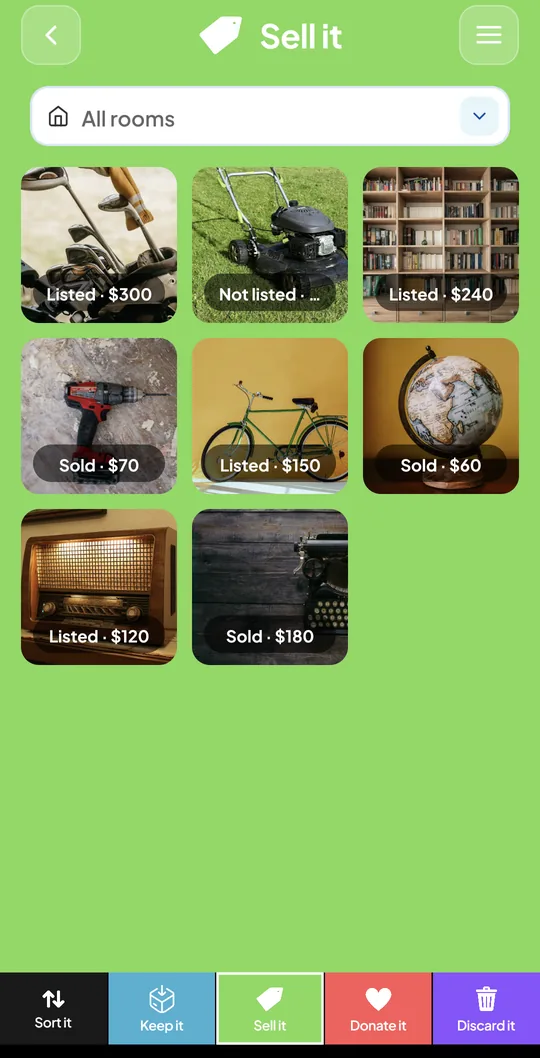
Step 3: Sell it
Selling is worth the effort for pieces that are solid, stylish or in demand.
- Where: local online marketplaces, consignment shops and auction houses. Vintage and antique pieces may do better with a specialist.
- Photos and details: take bright, clear photos from several angles, give exact measurements and describe any flaws honestly.
- Price to move it: second-hand furniture usually sells for much less than people expect. A fair price sells quickly.
- Stay safe: have another person at home when buyers collect, and be cautious of anyone who offers to overpay or asks for payment details.
- Get valuables appraised first. If you think a piece might be an antique, check before you list it.