Keepit Sellit Donateit
← All guides

Guide · Clearing out a home and dividing a parent's things

What to do with a parent's clothes after death: a gentle guide

There is no deadline for sorting a parent's clothes, so start when you feel ready and keep a few meaningful pieces first. Ask family if they want anything, then donate the rest to a charity shop, shelter or thrift store, or turn favorite garments into a memory quilt or pillow. If a decision feels too soon, box the clothes up and agree a date to look again.

I'm David Thomas, the founder of Keep it, Sell it, Donate it. When I talk to families about clearing a home, the wardrobe is the part people dread most. Opening a parent's closet can stop you in your tracks: the clothes hold their shape, their smell and a hundred small memories, and nobody warns you how heavy a cardigan can feel.

I built the app to make shared decisions like this easier, but this guide is about the human side first. It covers when to start, how to sort without losing things you will want later, what to keep, what to donate, and how to turn a few favorite garments into something you can hold onto. My advice is simple: go at your own pace, and stop whenever you need to.

This is general information, not legal, tax or financial advice. Rules differ by country, state and charity, so check the details that apply to you.

Step 1: Decide whether it needs doing now

Most of the time, the clothes can wait. Grief counselors and funeral homes tend to say the same thing: there is no right or wrong timetable, and decisions made in the first few weeks, while you are numb and tired, are the ones people most often regret. One writer who sorted her family's things in a hurry later wished she had kept more.

A few situations do put a clock on the job. The home may be rented and the landlord needs it back, the house may be going on the market, or the home may be a care facility room with a handover date. If that is you, look at the deadline honestly and do the least you must. You can often clear furniture and paperwork first and leave a closet or a single drawer untouched until later.

If there is no deadline, give yourself permission to wait. A common approach is to put the clothes in labeled bins, agree a date with your family to open them again, and decide then. Do not let anyone pressure you into a quick clear-out for the sake of tidiness.

My take: if there is no deadline, I would wait. A box you can reopen next month costs you some shelf space. A bag you have already given away cannot be undone.

Step 2: Check the legal and practical points first

Before any clothes leave the house, check three things.

  • The will and the executor. A parent's clothes are part of their estate. In most cases the executor, personal representative or administrator is the person who decides what happens to them, and they should agree with the rest of the family before items are given away or sold. Terms and rules differ between the US, UK and Australia. See our executor checklist for household contents.
  • Pockets and hidden items. Check every pocket, bag, coat lining and shoe. People keep cash, receipts, tickets, keys, notes and small jewelry in clothing. Put anything you find in one envelope.
  • Items that matter to someone else. A wedding outfit, a uniform, a religious garment or a piece a sibling remembers wearing may matter more to another person than to you. Ask before you decide.

This is general information, not legal advice. If the estate is complicated or the family disagrees, speak to the executor or a solicitor or attorney.

Step 3: Ask the family before you sort

Clothes are rarely only clothes. A coat, a scarf or an apron can be the thing a grandchild would treasure most, and assumptions about who wants what are often wrong. One author who wrote about sorting a family's things says that anyone who wants to delay a decision or keep an object should have that respected without exception, and that nobody should be pressured to take something.

A simple way to do it is to message siblings, children, grandchildren, close friends and carers with a short note: "I am starting on Mom's wardrobe. If there is anything you would like, tell me by this date, or come and choose." Giving a date stops the job from hanging over you forever.

Clothes are also easy to photograph. If someone lives far away, send photos of the pieces they might want. If you are the one who is far away, our guide to clearing a parent's house from another city or country has more ideas. For wider disagreements about who gets what, see what to do when siblings want the same item.

Tip: This is exactly why I designed the app around voting: photograph the clothes you are unsure about and let each family member vote Keep, Sell, Donate or Discard on their own phone, so nobody has to speak up over a cardigan in the moment. Try the free app.

Step 4: Sort into four piles, one drawer at a time

Start small. A bathroom shelf or a single drawer is easier than a whole wardrobe, and funeral-home guides suggest pacing yourself with breaks, because emotions make the job slower than you expect. Pick a time of day when you have energy, and consider having a friend with you.

Use four piles, and handle each item once if you can:

  • Keep: pieces you or family want for their meaning.
  • Memory project: clothes you want to turn into a quilt, pillow or similar item.
  • Donate: clean, wearable clothes someone else can use.
  • Discard or recycle: stained, torn or worn-out items.

Add a fifth box, "not sure", and do not feel bad about using it. Put the box away, write a date on it and come back. Things thrown away in haste cannot be recovered, but a box of maybes only costs you some shelf space.

If you keep going back and forth over an item, hold it, take a photo of it, and then decide. Photos help many people let go of objects without losing the memory.

What I would do: start with the drawer that feels easiest, not the coat they wore every day. Build up to the hard pieces once you have found a rhythm.

Step 5: Choose what to keep without filling a storage unit

Keeping everything is not realistic, and keeping nothing can leave a hole later. A few well-chosen pieces usually serve better than ten boxes.

  • Everyday favorites: the cardigan they always wore, a robe, a favorite shirt or hat.
  • Pieces with a story: a wedding outfit, a uniform, a coat from a special trip, handmade knitwear.
  • Items that still smell like them: some people seal one scarf or shirt in a bag for exactly this reason.
  • Things you will actually use: a scarf you wear, a watch, a jacket that fits.

Clothes that do not fit can still be kept for what they mean. One writer on this topic suggests bringing meaningful objects into everyday life rather than boxing them away, because stored items often never get used or looked at again. If you do store anything, set an end date and a limit, such as one box per person, so it does not turn into an expensive storage unit with no plan.

Jewelry, watches and accessories need a little more care because some pieces carry real money value. If that is you, see what to do with a deceased parent's jewelry.

Step 6: Turn favorite clothes into a keepsake

If you want something to hold or see every day, a memory item can be the best way to keep a parent close without keeping a whole wardrobe.

  • Memory quilt or wall hanging: squares cut from shirts, blouses or dresses, stitched together. This is the most common choice, and many sewers and small businesses make them to order.
  • Memory pillow or teddy bear: made from a single shirt or a few small pieces. Good for grandchildren, who each can have one.
  • Framed piece: a tie, a scarf, a handkerchief or a patch in a shadow box.
  • Small items: a pocket square, a hair ribbon or a tote bag from fabric.
  • Pillowcases and cushions: a good way to use a patterned shirt.

Choose pieces before you send anything, because cutting is permanent. Pick fabrics that are not too thin, include pockets, buttons or labels if you like them, and ask the maker how many garments they need. Prices and turnaround times vary a lot, so ask for a quote and check reviews. If you sew, the project itself can be a quiet way to work through the loss, and a friend or relative may offer to help.

Step 7: Donate the rest, and know what charities take

Most clean, wearable clothing can go to a local thrift store or charity shop, and many families find comfort in knowing someone else will wear it. Others find handing over the bags harder than expected, which is normal. If you need to, ask a friend to do the drop-off for you.

  • Charity and thrift shops: usually take everyday clothes, coats, shoes and accessories in good condition. Call first or read the shop's website, because policies on stains, underwear and large amounts differ.
  • Shelters and community groups: some accept coats, work clothes, warm layers and professional outfits. Ask what they need before you arrive.
  • Specialist groups: some organizations take interview clothes, formal wear, school uniforms or religious garments. Search locally.
  • Textile recycling: for worn-out items that cannot be donated, many areas have textile banks or recycling points.

Sort donations into bagged lots so you can get a receipt if you need one for your own records. Our guides to how to donate clothes and what you cannot donate explain what charities usually accept and how to avoid dumping unwanted items on them.

Step 8: Look after yourself while you do it

This task can bring up grief that you thought had settled. That is normal. A few things help.

  • Do not work alone if you can avoid it. A sibling, partner or friend can hold bags, make tea and sit with you when you stop.
  • Set a time limit, such as one hour, and then stop even if there is more to do.
  • Stop when you need to. Walking away from a half-sorted drawer is allowed.
  • Share the memories. Tell the stories that come up. Take photos of the clothes, and of the wardrobe before you start.
  • Ask for support. If you feel stuck, a grief counselor, a bereavement support line or your doctor can help. Many funeral homes also offer free grief support.

If the clothes are only one part of clearing a whole house, plan the rest in stages and be gentle with the timeline. Our guide to clearing out a parent's house breaks the job into manageable steps.

If you take one thing from this guide, let it be this: there is no wrong pace. I would rather you took a month and felt at peace with it than finished in a weekend and regretted it.

Quick checklist

  • Checked whether a deadline really exists
  • Confirmed with the executor or family before giving anything away
  • Checked every pocket, bag and lining
  • Asked family and close friends what they would like
  • Sorted into keep, memory project, donate and discard
  • Used a labeled "not sure" box with a review date
  • Chose a small number of pieces to keep
  • Called the charity before dropping off donations
  • Took photos of anything let go

Sorting with family

Let everyone say what matters to them

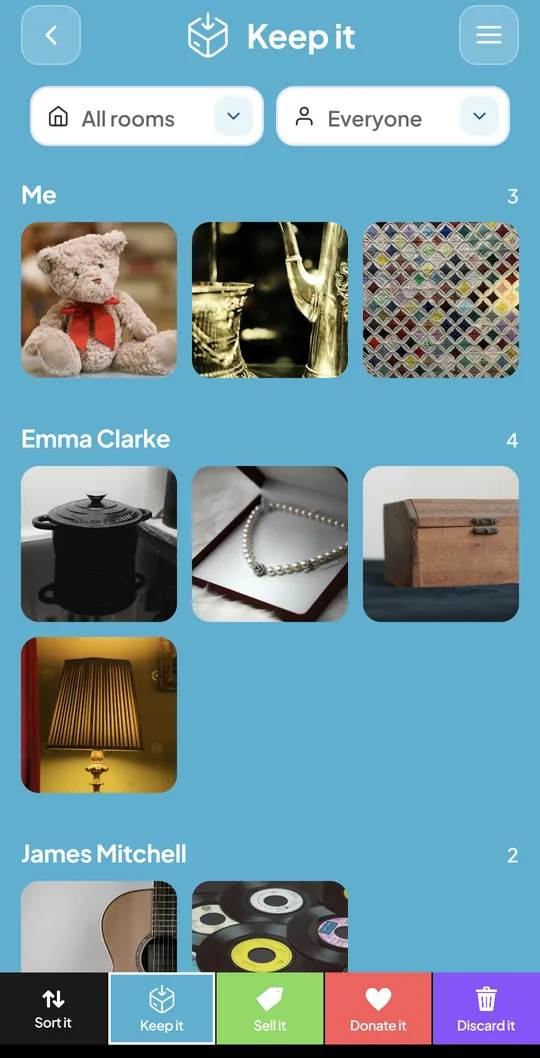
I built Keep it, Sell it, Donate it so a family can photograph a parent's things room by room and each person can vote on their own phone. Nothing is decided until everyone has voted, and Keep items are grouped by person, so you can see who wants which cardigan before anything goes into a charity bag.

Families in Australia, the USA and Europe already use Keep it, Sell it, Donate it as their tool for decluttering and sorting a home together. It is free to start, with no credit card needed.

Get it onGoogle PlayComing soon to theApp Store
Keep folder showing items grouped by the person who is keeping them

Frequently asked questions

How long should you wait before getting rid of a parent's clothes?

There is no set time. Many people wait weeks or months, and grief experts often advise against rushing decisions while you are in shock. If you need to clear the house sooner, box the clothes and agree a date with your family to review them.

What should I keep of my parent's clothes?

Keep a few pieces that carry meaning or that you will use, such as a favorite cardigan, a coat, a robe or a wedding outfit. A small number of items is easier to enjoy than a full wardrobe, and photos can help with the rest.

Can I donate a deceased parent's clothes straight away?

You can, once the executor and family agree. Many charity shops and thrift stores take clean, wearable clothing. Some people find early donation painful, so it is fine to pause, ask a friend to help or start with items you are sure about.

What can you make from a deceased parent's clothes?

Common choices are a memory quilt or wall hanging, a pillow or teddy bear, a framed tie or scarf, and small items such as a tote bag. Choose the pieces first, because cutting is permanent, and ask makers for quotes and turnaround times.

Do I need permission to give away my parent's clothes?

Clothes are usually part of the estate, so the executor or personal representative normally decides, ideally together with the family. Rules differ by country and by will. For a complicated or disputed estate, check with the executor or a solicitor or attorney.

Is it okay to wear a parent's clothes?

Yes, many people find comfort in wearing a parent's coat, scarf or sweater, and some say it brings the memory into daily life. There is no right answer. If it feels too soon, put the item away and try again later.

What if my siblings and I disagree about the clothes?

Slow down, give everyone a date to claim items, and let each person say what matters most to them. Taking turns choosing, or using a neutral person to decide ties, helps. If tension continues, a family meeting or mediation can help.